
Spinal Care Chiropractic in Parkville, MD
When back or neck pain starts to affect your day, it helps to know where it’s coming from. Spinal care chiropractic in Parkville, MD starts with a full evaluation of how your spine, joints, and nerves are working.
We address concerns like back pain, neck pain, sciatica, posture, and certain types of headaches. Every new patient starts with a health history review and a physical assessment, so we base any care plan on what we find.

Below, you can learn more about each care option and how it may apply to you.
01
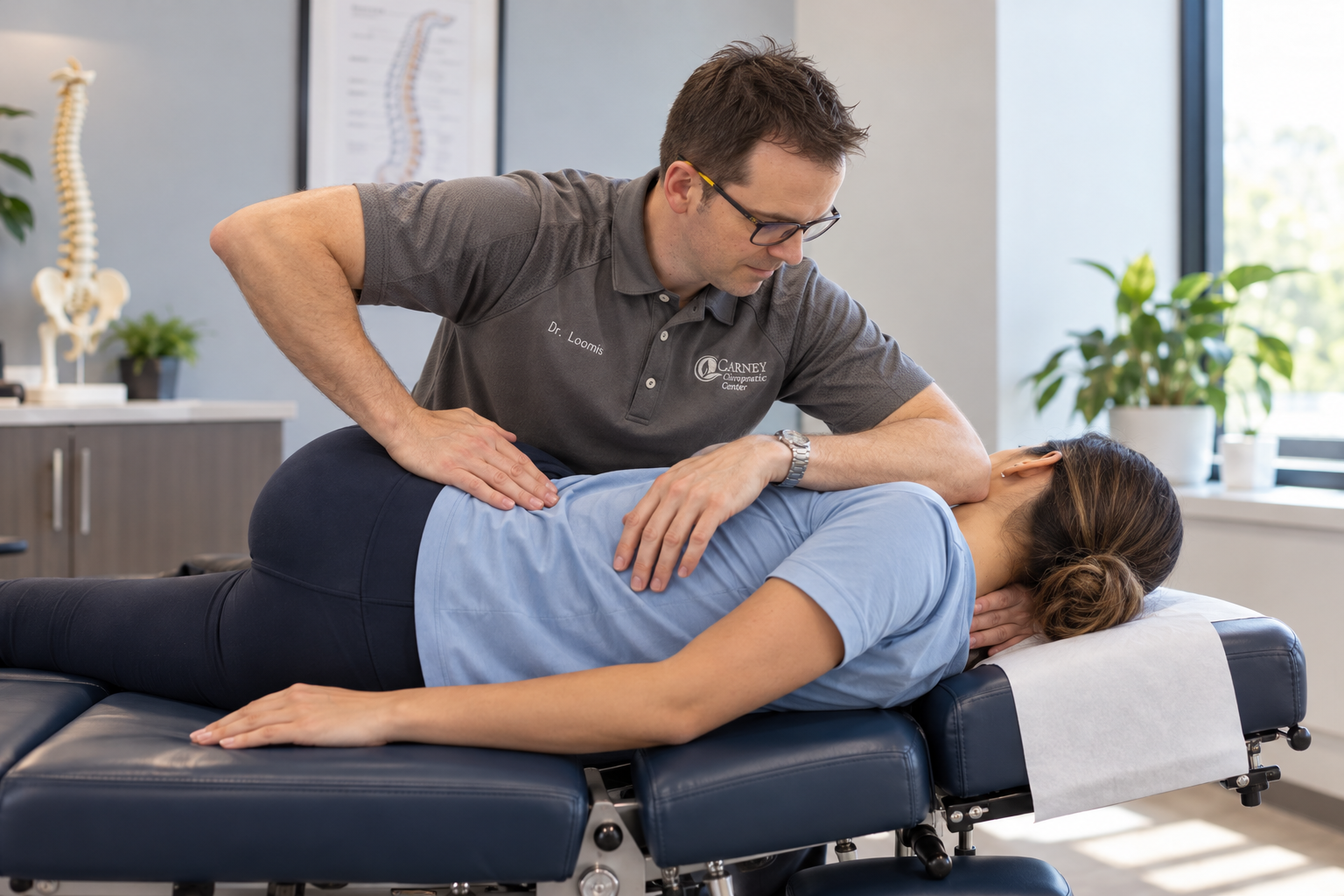
Back Pain Chiropractor
Many people consider this care when back pain keeps coming back or when bending and lifting start to feel harder than they should. It’s often the first step for patients who want to understand what’s going on before deciding on care.
We look at how your lower and middle spine move. Many of the patients we see in Parkville spend long hours driving on Harford Road and the Beltway or lifting and carrying at work. Both can put steady stress on the low back.
- Your evaluation comes first, so care is based on what we actually find
- We check for joint dysfunction, which means a spinal joint isn't moving the way it should
- Your plan may use hands-on adjustments, muscle work, and home exercises
02
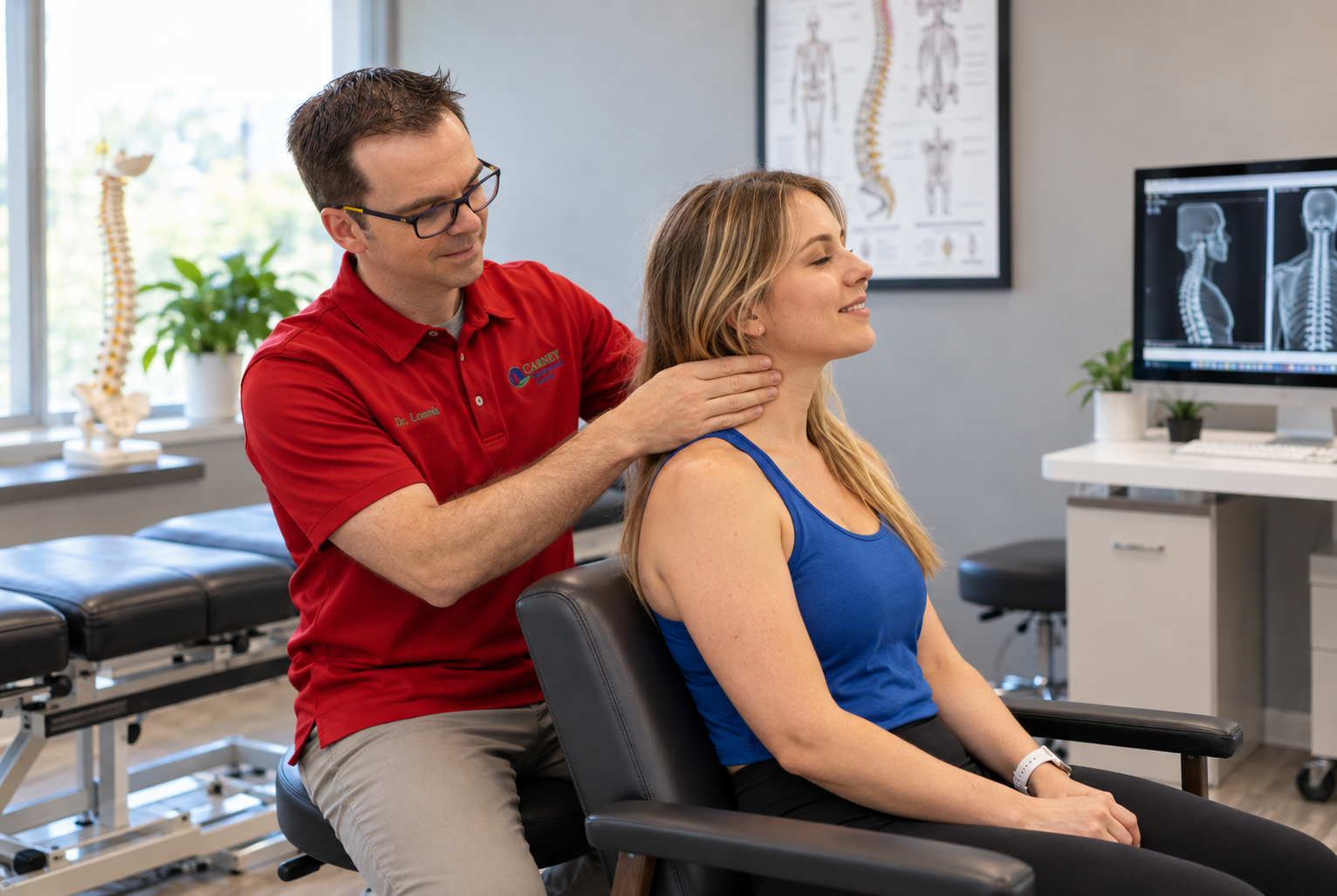
Neck Pain Chiropractor
This care usually comes up when your neck feels stiff most mornings, or when turning to check traffic feels tight. It’s common for people who spend long hours looking down at a screen.
We assess your cervical spine, the upper part of your spine. In Parkville, many patients work from home or at a desk without proper support. Looking down for hours puts a steady load on your neck. Some people call this “tech neck.”
- We check range of motion, meaning how far your neck can turn and tilt
- Your posture, work setup, and daily habits are part of the evaluation
- Any care is based on what your evaluation shows

03
Sciatica Chiropractor
Many people look into this care when pain, tingling, or numbness runs from the low back down one leg. It may worsen with sitting, standing, or walking.
The sciatic nerve is the longest nerve in the body, and it can get irritated in a few different ways. Many Parkville patients commute along Joppa Road each day or work on their feet for long shifts. Staying in one position for long stretches can make sciatica pain more noticeable.
- We look for nerve impingement, meaning something like a bulging disc or tight muscle is pressing on a nerve
- Your health history and screening help rule out causes that need a medical doctor
- Any plan depends on what your evaluation shows
04
Posture Alignment Therapy
This care often fits people who notice rounded shoulders, a forward head, or aches after long days in one position. It looks at how your body holds itself when you sit, stand, and move.
Many homes around Parkville are older and have lots of stairs. Many patients also split their day between a desk, a car, and home projects. Over time, those daily habits can shape how your spine, hips, and shoulders line up.
- We look for muscle imbalance when the muscles around your spine don't share the work evenly
- Care may include corrective exercises, adjustments, and tips for how you sit and stand
- Small changes to your work or home setup are often part of the plan

05
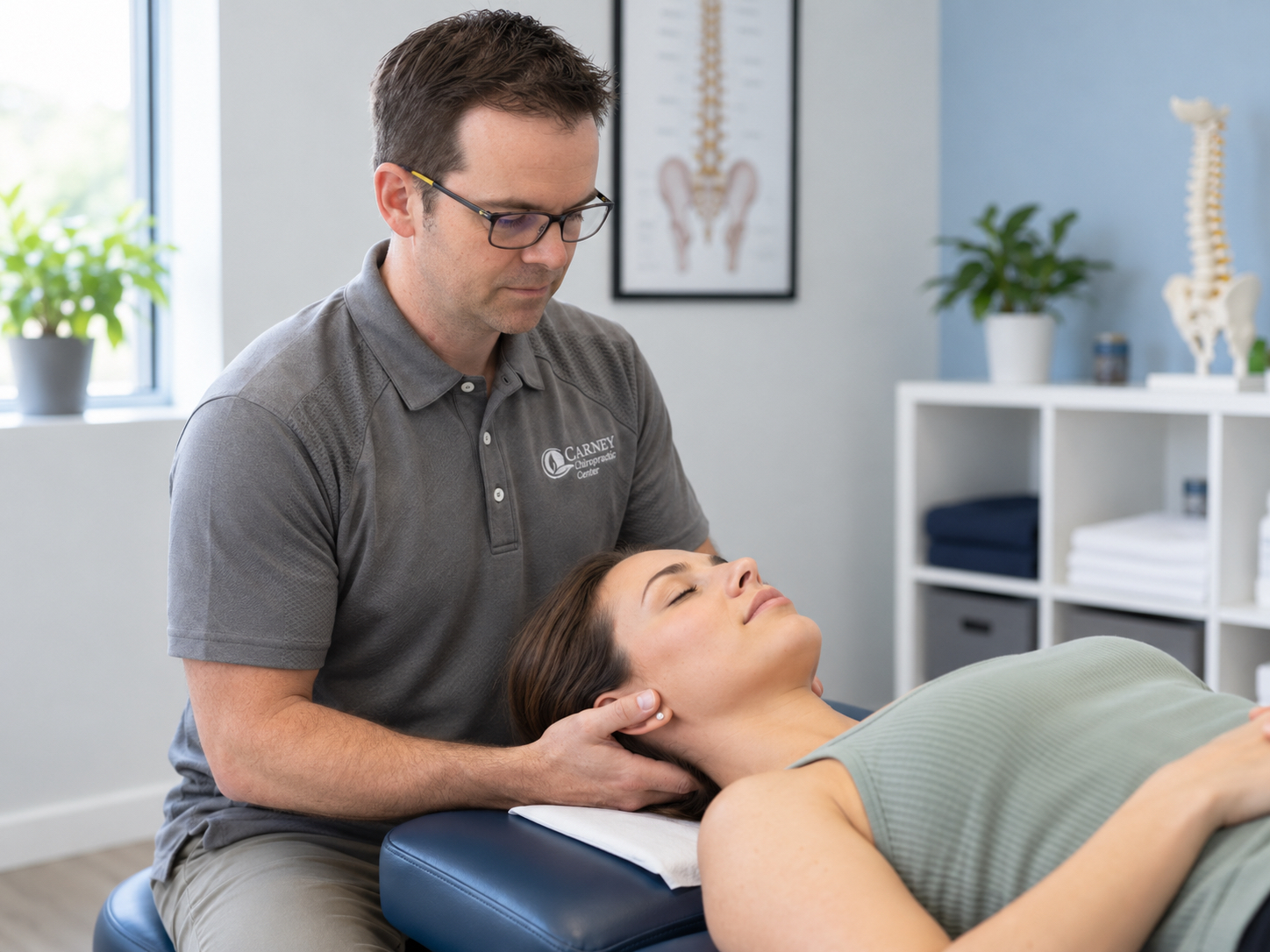
Headache Chiropractor
This care is focused on headaches linked to the neck. Many people look into it when headaches start at the base of the skull or come with a stiff neck, especially after long hours of screen time or driving.
Stop-and-go traffic on Taylor Avenue or Perring Parkway often means sitting with your head pushed forward. Tension in the neck and shoulders can build up from that.
- We look for tension-type and cervicogenic headaches. Cervicogenic means the headache comes from the neck
- Your history, posture, and neck movement are all part of the evaluation
- Sudden, severe, or unusual headaches need medical care first
Not Sure Where to Start?
Back, neck, and nerve symptoms often overlap, so it’s normal not to know which type of care fits. It’s fine to start with a question instead of a decision.
Call or text our office at (410) 882-0720, and we’ll help you figure out where to begin.